Review: Cute Cat Head of Christmas Card Design
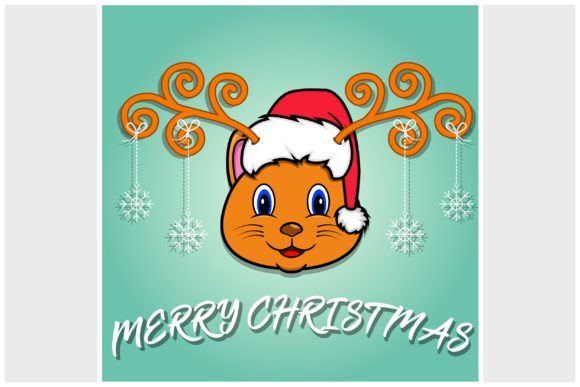
As a designer who spends more time staring at stitch simulations than actual fabric, I have learned that not every machine embroidery design translates well from screen to needle. Some look fantastic in a digital preview but turn into a tangled mess of thread breaks and puckering on the hoop. When I first loaded the Cute Cat Head of Christmas Card into my software, my initial reaction was cautious optimism. It falls under the category of Illustrations, which often implies complex shading and fine lines—two things that can be tricky in embroidery. However, after reviewing the layout and testing a sample run, I found this piece to be a surprisingly versatile asset for holiday-themed projects.
First Impressions and Visual Personality
The immediate mood this design creates is warm, nostalgic, and undeniably charming. The silhouette of the cat head is distinct, avoiding the overly abstract shapes that sometimes confuse buyers. What stands out most is the balance between detail and simplicity. In embroidery, less is often more. If a design is too dense, it becomes stiff; if it is too sparse, it lacks impact. This design strikes a middle ground that feels intentional. The visual personality is soft and approachable, making it an ideal candidate for items meant to evoke comfort and joy. It does not scream for attention with aggressive colors or chaotic lines; instead, it invites a closer look, which is exactly what you want in a personalized gift or a boutique product.
Real-World Application: The Holiday Tote Bag Test
To truly evaluate a design, you must imagine it in a real-life scenario. I recently worked on a custom order for a local craft fair vendor who needed a standout item for her holiday collection. We decided to use the Cute Cat Head of Christmas Card on a natural canvas tote bag design. This was a strategic choice. Canvas provides a stable base that handles medium-density stitching well, and the neutral background allows the thread colors to pop without competing with the fabric pattern.
The result was impressive. The design sat centrally on the bag, acting as a focal point without overwhelming the surface area. Customers at the mock setup were drawn to it immediately, citing the "cozy" feel of the cat motif combined with the subtle festive elements. This confirms that the design works exceptionally well for handmade product lines where emotional connection drives sales. It is not just a graphic; it is a mood setter. For Etsy sellers looking to expand their holiday inventory, this type of imagery performs well because it appeals to cat lovers and holiday enthusiasts simultaneously, doubling the potential audience.
Versatility Across Products and Fabrics
Beyond tote bags, I see strong potential for this design in sweatshirt embroidery. A crewneck sweatshirt in heather gray or deep forest green would provide a excellent contrast for lighter thread colors. The design scales reasonably well, meaning it can be resized for smaller applications like embroidered patch creations or larger statements on pillow covers. However, context matters. While it fits beautifully on flat surfaces like aprons and kitchen towels, I would advise caution when applying it to curved surfaces like caps. The width of the cat’s head might require careful hooping and possibly a smaller version to avoid distortion on the front panel of a hat.
For baby embroidery projects, such as onesies or burp cloths, the design’s soft aesthetic is a perfect match. Parents love animal motifs, and the gentle lines here are safe and appealing. Just ensure you are using soft threads and appropriate stabilizers to keep the finished product comfortable against sensitive skin. In the realm of commercial embroidery, this asset could also serve as a seasonal accent for corporate gifts, adding a touch of whimsy to otherwise standard branded merchandise.
Technical Considerations and Stitching Clarity
From a technical standpoint, the success of any embroidery file depends on how it handles different stitch types. Without knowing the exact stitch count, I recommend inspecting the simulation closely. Look for areas where satin stitch borders meet fill stitch interiors. In this design, the transitions appear smooth, which reduces the risk of thread bunching. However, always check the stitch density. If the design is too dense for thin fabrics, it will pucker. If it is too light for heavy fabrics, it may look sparse.
I strongly advise testing the design on scrap fabric before committing to your final material. Pay attention to how the thread colors interact. Since this is a holiday-themed piece, you might be tempted to use reds and greens. Ensure there is enough contrast between these colors and the background fabric. A dark green thread on a black sweatshirt will vanish, ruining the visual appeal. Use a printable mockup or digital preview to test color combinations virtually, but never skip the physical test stitch. This step saves time, money, and reputation.
Navigating Fabric Challenges
Not all fabrics behave the same way. When working with stretchy materials like jersey knits for t-shirts, a cut-away stabilizer is non-negotiable to prevent the design from warping after washing. For textured fabrics like linen or towel material, the small details in the cat’s face might get lost. In such cases, consider simplifying the thread palette or increasing the size slightly to maintain clarity. Avoid using this design on very dark fabrics unless you are confident in your thread selection, as shadows can obscure the finer lines of the illustration.
Additionally, be mindful of hoop size limitations. If you are working with a small 4x4 hoop, you may need to resize the design significantly. Always check that the resized version retains its integrity. Tiny details can become fragile and prone to breaking if scaled down too far. Conversely, scaling up too much might reveal gaps in the fill stitches. Finding the sweet spot requires experimentation.
Business Value and Brand Consistency
For small shop product creators, consistency is key. This design fits well within a broader collection of holiday-themed assets. It helps build a cohesive brand identity that customers can recognize. When used in digital embroidery file bundles, it adds value by offering variety. Buyers appreciate designs that are ready to stitch with minimal editing. By providing clear instructions and recommending best practices, you enhance customer trust and reduce support queries.
The Cute Cat Head of Christmas Card is more than just a cute image; it is a practical tool for creating engaging finished product items. Whether you are making holiday embroidery for family gifts or stocking your online store with unique apparel, this design offers a reliable foundation. Just remember to respect the technical limits of your machine and materials. Check the licensing terms if you plan to sell finished items, ensuring you are compliant with the creator’s rules for craft business use.
Final Verdict
In conclusion, this design earns a solid recommendation for designers seeking a blend of charm and practicality. It performs well on stable fabrics, scales appropriately for various goods, and carries a visual weight that attracts attention without being overwhelming. By following basic best practices—testing on scraps, choosing contrasting threads, and using proper stabilizers—you can transform this digital asset into a high-quality physical product. It is a worthy addition to your library of design assets, particularly for the upcoming holiday season.