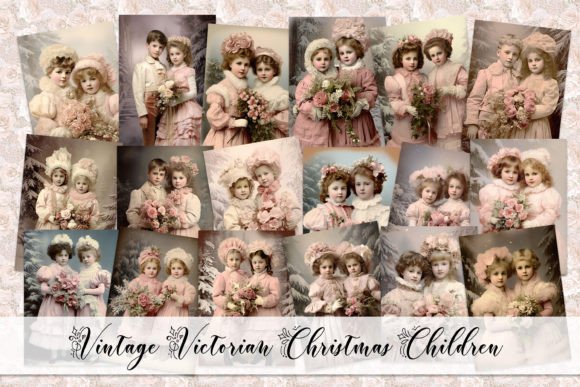
Reviewing Vintage Victorian Christmas Children for Embroidery
As a designer who has spent years digitizing and testing thousands of motifs, I approach every new machine embroidery design with a mix of curiosity and skepticism. We have all been there: you download a file that looks stunning on the screen, only to find it turns into a tangled mess of thread once it hits the fabric. That is why I took a close, practical look at Vintage Victorian Christmas Children. This piece falls under the category of Illustrations, which immediately signals that we are dealing with complex lines, shading, and a narrative quality rather than simple geometric shapes.
The first impression of Vintage Victorian Christmas Children is one of nostalgic warmth. It captures that specific, soft aesthetic of 19th-century holiday cards, where children are depicted in heavy wool coats, bonnets, and scarves, often holding toys or standing in snowy scenes. For an embroidery project, this mood is invaluable. It does not scream for attention with neon brightness; instead, it invites the viewer to lean in. This makes it an exceptional choice for products that rely on emotional connection, such as heirloom-quality baby items or boutique holiday decor.
Real-World Application: The Holiday Tote Bag Test
To truly evaluate how this design performs, I mentally placed it into a common real-life scenario: creating a custom embroidered tote bag for a local craft fair. Tote bags are a staple for any Etsy seller or small shop product line because they are versatile and high-visibility. However, canvas fabric has a distinct weave that can interfere with fine details.
When visualizing Vintage Victorian Christmas Children on a natural cotton canvas, the contrast becomes key. The intricate details of the Victorian clothing—such as the lace on a collar or the folds of a scarf—require precise stitch placement. If the stitch density is too low, these details will get lost in the texture of the fabric. If it is too high, the canvas might pucker. In my experience, designs in this illustrative style work best when paired with a cut-away stabilizer to provide long-term support, especially since tote bags are functional items that will be washed and loaded with groceries.
This design also shines in the context of sweatshirt embroidery. Imagine a cream-colored, heavyweight fleece hoodie. The softness of the fleece complements the gentle, vintage vibe of the children. Here, the fill stitch areas of the coats and hats would provide a lovely texture against the smooth background. It transforms a standard garment into a personalized gift that feels thoughtful and curated, rather than mass-produced.
Navigating Technical Challenges and Fabric Choices
While the aesthetic appeal is strong, we must discuss where Vintage Victorian Christmas Children requires careful handling. Illustrative designs often contain small, intricate elements. If you are planning to use this on a curved surface, such as a cap or hat, you need to be cautious. The distortion inherent in stitching on a curved hoop can warp the faces or proportions of the children. For headwear, I would recommend simplifying the design or ensuring your digitizer has optimized the pull compensation specifically for caps.
Another critical consideration is fabric color. Victorian illustrations often rely on subtle shading. If you stitch this on a dark fabric using standard thread colors, you may lose the definition. You must check thread color contrast carefully. A running stitch outline might not be enough to define the edges against a black or navy background. In such cases, consider using a lighter underlay or adding a satin stitch border to make the design pop. Conversely, on white or pastel fabrics, ensure that the light-colored threads used for skin tones or snow do not disappear. Testing on scrap fabric is not just a suggestion; it is a necessity for this level of detail.
For those interested in applique design techniques, this motif could be adapted by using fabric pieces for the larger clothing areas, reducing the stitch count and adding a tactile, layered dimension. This approach is particularly useful for baby embroidery, where minimizing the amount of thread directly against sensitive skin is a priority. However, always verify if the original file supports applique or if you are working with a standard fill-stitch version.
Commercial Value and Brand Consistency
For craft business owners, the choice of design directly impacts brand perception. Vintage Victorian Christmas Children exudes professionalism and timeless charm. It fits seamlessly into a brand identity that values tradition, quality, and handcrafted care. Using this design on kitchen towels, pillow covers, or even framed wall art can elevate your finished product from a simple commodity to a decorative asset.
When listing such items on platforms like Etsy, the visual appeal of the design plays a huge role in buyer engagement. A well-stitched Victorian scene tells a story. It evokes memories of family gatherings and quiet winter evenings. This emotional resonance can justify a higher price point compared to generic, clip-art style graphics. Furthermore, because the design is categorized under Illustrations, it suggests a level of artistic merit that appeals to customers looking for unique, non-mass-market items.
However, commercial success also depends on reliability. Before offering this as part of your commercial embroidery services, you must confirm the licensing terms. Ensure that the digital embroidery file you purchase allows for the sale of finished physical goods. Most reputable designers allow this, but it is crucial to read the specific license agreement to protect your business.
Practical Designer Notes for Best Results
To get the most out of Vintage Victorian Christmas Children, follow these practical steps during your production process:
- Test on Scrap Fabric: Always run a test stitch-out on the same type of fabric you intend to use for the final product. This helps you identify any thread breaks or tension issues.
- Check Stabilizer Choice: For woven fabrics like linen or cotton, a medium-weight cut-away stabilizer is usually best. For knits like sweatshirts, ensure the stabilizer prevents stretching during stitching.
- Review Stitch Density: Inspect the dense areas, such as the children's hair or heavy coats. If the density is too high, it may cause puckering. If possible, adjust the density settings in your software or consult the digitizer's notes.
- Contrast is Key: Use a color chart to select threads that offer sufficient contrast against your fabric. Avoid low-contrast combinations unless you are aiming for a subtle, tonal effect.
- Hoop Size Confirmation: Verify that your machine’s hoop size accommodates the full design. If the design is large, you may need a jumbo hoop or a multi-positioning technique.
- Mockup Testing: Create printable mockups or digital previews on both light and dark backgrounds to see how the design translates visually before committing to stitching.
In conclusion, Vintage Victorian Christmas Children is a compelling choice for designers and makers who value narrative and tradition in their work. It is not a quick, slap-on graphic; it is a design that demands respect for its details and rewards careful execution. Whether you are creating a holiday embroidery piece for your home or a line of custom apparel for your shop, this design offers the depth and character needed to stand out in a crowded market. Just remember to respect the technical requirements of illustrative stitching, and your final products will reflect the high quality and care that your customers appreciate.